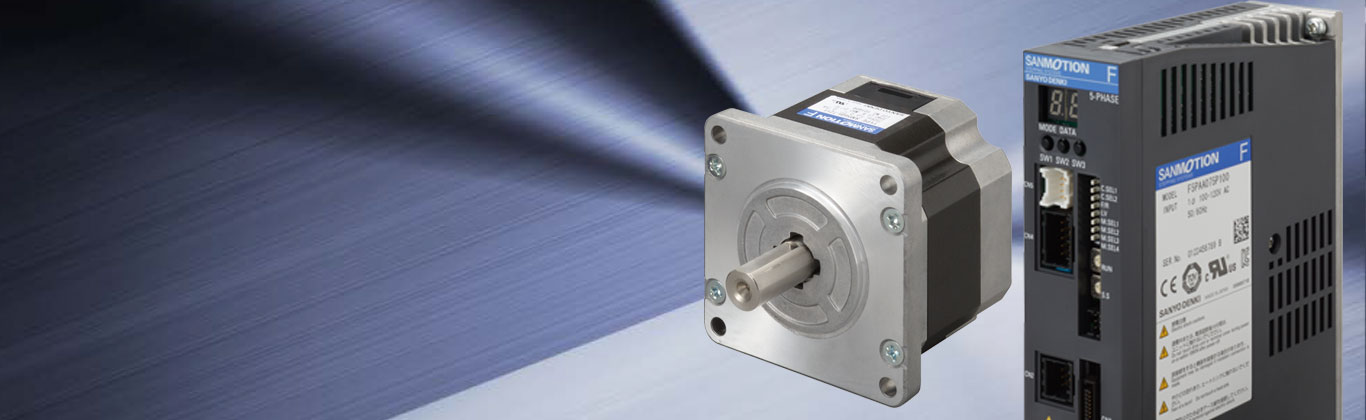
Knowledge
[Customization Case Study] Shaft Machining



One of the key benefits of customization is the ability to apply products to a wide range of applications while achieving more advanced control and enhanced safety.
This article introduces the benefits of stepping motor customization, along with specific customization case studies.
SANYO DENKI has extensive experience in motor customization. We offer motor customization tailored to customer requirements, with production volumes considered as needed. For further details, please feel free to contact us.
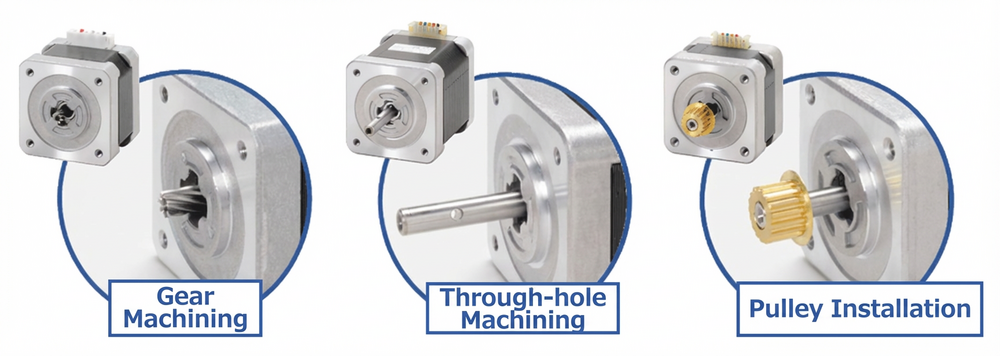
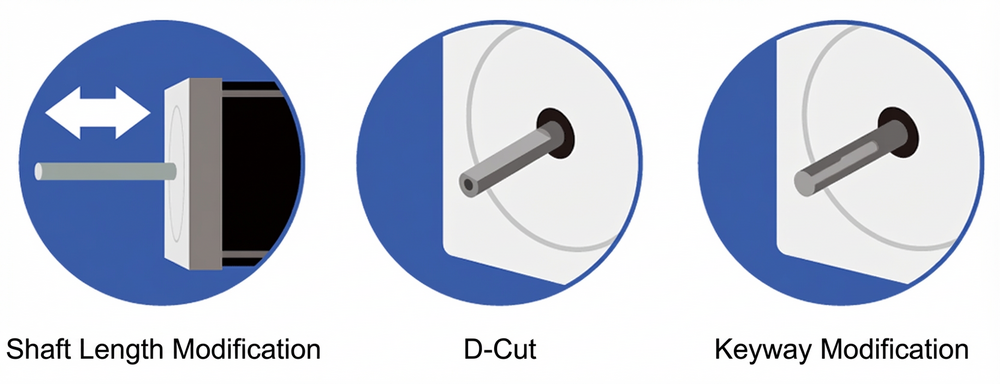
Typical examples of shaft machining for stepping motors include shaft length adjustment, D‑cut processing, keyway machining, and gear installation.
Other options include machining for gears, through hole machining, and pulley installation.
Motor shafts must engage accurately with other components in order to be properly connected.
By machining the shaft diameter and shape, the motor can be fitted accurately and easily to other components and equipment.
In addition, machining a keyway into the shaft helps prevent shaft misalignment with couplings and reduces power transmission losses.
When shaft machining is required, SANYO DENKI generally recommends delivering motors in a customized configuration. The reasons for this approach are outlined below.
When motors are post‑processed after delivery, external forces may be applied to the shaft, which can potentially damage components such as bearings.
Damaged bearings can lead to abnormal noise during motor operation and may also have a negative impact on motor lifespan.
In contrast, when shaft machining is performed before motor assembly,no external force is applied to bearings or other components, thereby helping to maintain motor quality.
When integrating a motor into equipment, it is typically connected to gear reducers or couplings. If the shaft is delivered in a compatible shape, no additional processing is required.
By customizing the shaft shape in advance, assembly effort can be reduced, along with the number of purchased components.
In addition, no machinery or equipment is required for post‑processing.
Post processing performed after delivery falls outside the scope of warranty coverage. However, when customization is carried out prior to delivery, the customized motor as a complete product is covered by the warranty.
This case study describes an equipment manufacturer seeking to reduce the size of a next generation model.
With a standard motor, the shaft shape did not fit the equipment, making downsizing difficult.
To solve this issue, the shaft length and shape were customized to match the equipment.
This allowed direct connection to the equipment in a configuration close to a built in design, contributing to downsizing of the next generation model.
In addition, keyway machining eliminated positional misalignment between the motor and the equipment.
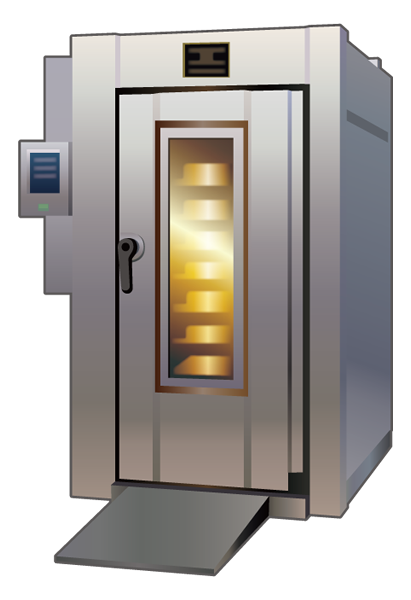
This case study involves a commercial kitchen equipment manufacturer developing a next generation oven.
To ensure uniform temperature inside the oven, air needed to be circulated using fan like blades to eliminate temperature variations.
The high temperature inside the oven prevented the motor from being installed internally, so the motor was installed outside the oven with metal blades mounted on the shaft to agitate the air. However, the large size of the oven made the shaft length of a standard motor insufficient.
To resolve this issue, shaft machining was performed to extend the shaft to a length suitable for the equipment, enabling the intended motion.
When extending a shaft, both radial load * and thrust load *must be considered.
* Radial load is a force applied perpendicular to the shaft centerline, while thrust load, also referred to as axial load, is a force applied parallel to the shaft centerline.
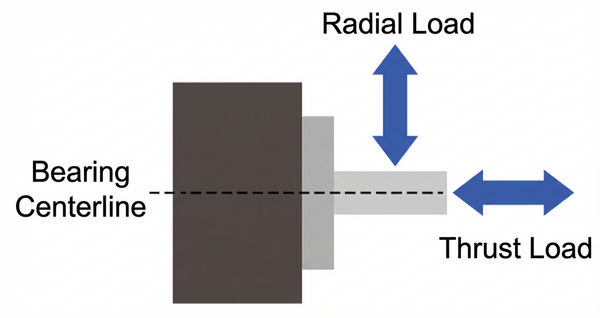
In this case, horizontal installation was expected to result in a large radial load. Therefore, the shaft diameter was increased to ensure sufficient strength against the radial load.
Please feel free to consult us about any challenges you may face with customization.
Leveraging our extensive customization expertise, we can proactively propose functional improvements.
Through SANYO DENKI’s customization solutions, we help enhance the competitiveness of our customers’ equipment.
* Please note that customization may be subject to certain conditions, such as minimum order quantities. Contact us for further details.
Update date: /Release date:

Aiming to be the world's No. 1 in manufacturing
Technical capabilities that enable advanced customization

Our 100th anniversary soon
Global Network