TECH COMPASS
SANYO DENKI 's product and technical information site
Knowledge
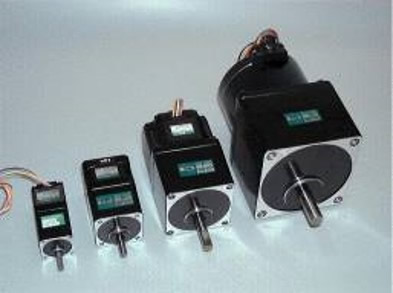
[Customization Case Study] Brake and Encoder Mounting for Stepping Motors

Enhancing Torque and Enabling Position Deviation Detection

The benefit of motor customization is that it enables advanced control and improved safety, while allowing stepping motors to be applied to a wide range of applications.
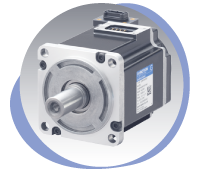
This article introduces the benefits and examples of stepping motor customization, including mounting gear reducers, brakes, and encoders.
SANYO DENKI has extensive experience in stepping motor customization and supports a wide range of applications.

Examples of Stepping Motor Customization: Stepping Motors with Gear Reducers, Brakes, and Encoders

Purpose and Benefits of Adding a Gear Reducer to a Stepping Motor

Figure: Stepping motor with reducer

Increasing Torque

By adding a gear reducer to a stepping motor, the torque characteristics at the output shaft can be improved.
For example, when a gear reducer with a reduction ratio of 1/10 is mounted on a motor, the rotational speed is reduced to one-tenth, while the output torque increases by a factor of ten. This makes it possible to provide sufficient driving force even in applications that require high torque.
banner_dl_fan_selection_1000x270

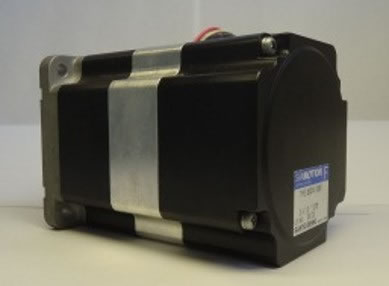
Purpose and Benefits of Adding a Brake to a Stepping Motor

Figure: Stepping Motor with Brake

Improving Safety

In applications with vertical axes that may fall due to gravity, a holding brake is used to prevent unintended downward movement.
By adding a power-off activated brake—a brake that engages when power is not supplied—to the motor, it is possible to hold the motor position when stopped and prevent the load from falling.
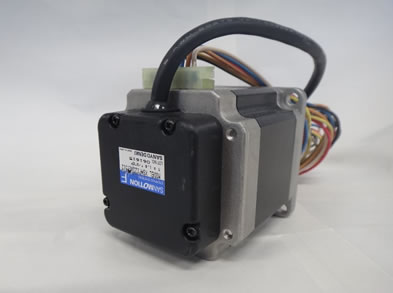
Purpose and Benefits of Adding an Encoder to a Stepping Motor

Figure: Stepping Motor with Encoder (Cable Type)
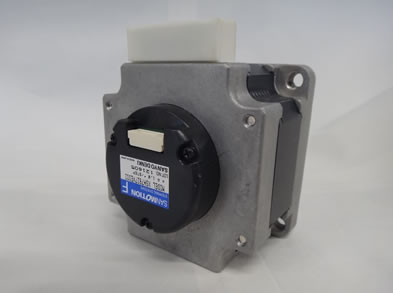

Figure: Stepping Motor with Encoder (Connector Type)

Detecting Position Deviation

Stepping motors normally operate by moving a specified number of steps. However, when load variations or friction become significant, the motor may experience position deviation, also known as step loss. Combining a stepping motor with an encoder is an effective way to detect this position deviation.
banner_dl_fan_selection_1000x270

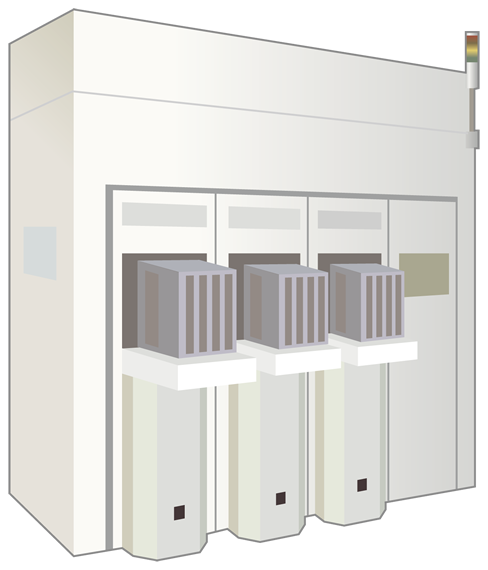
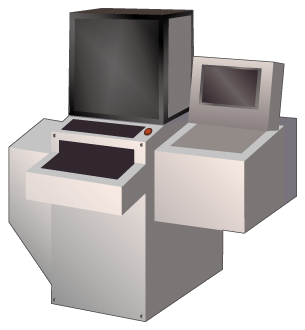
Case Study 1: Enhancing the Performance of Semiconductor Manufacturing Equipment with Stepping Motors Featuring Brakes and Encoders

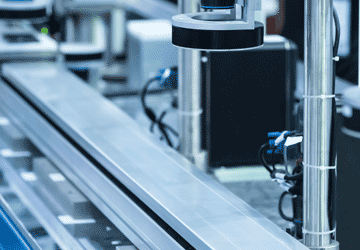
Semiconductor manufacturing equipment

Equipment

  • Semiconductor manufacturing equipment

Challenges

  • Improve equipment performance for the release of a new model
  • Achieve reliable positioning
  • Prevent workpieces from falling

Solution

  • Replaced the existing motor with a 5-phase stepping motor to achieve faster and more accurate positioning
  • Customized the motor by adding an encoder for position detection
  • Customized the motor by adding a brake to prevent workpiece drop

Case Study 2: Enhancing the Performance of Food Packaging Machinery with Stepping Motors Featuring Gear Reducers

Equipment

  • Food packaging machinery

Automatic food packaging price labeling machine

Challenges

  • Improve positioning accuracy by reducing backlash during forward and reverse rotation
  • Extend equipment service life due to accelerated wear of the gear reducer

Solution

  • Proposed an optimal low-backlash gear with flexible customization support

Case Study 3: Applying Stepping Motors with Encoders to Agricultural Applications

Equipment

  • Fruit harvesting robot

Plant factory

Challenges

  • Achieve efficient harvesting using a robot
  • Pick fruit without causing damage

Solution

  • Customized the motor by adding an encoder
  • Enabled higher-level control to detect position deviation and safely stop the system without damaging the fruit

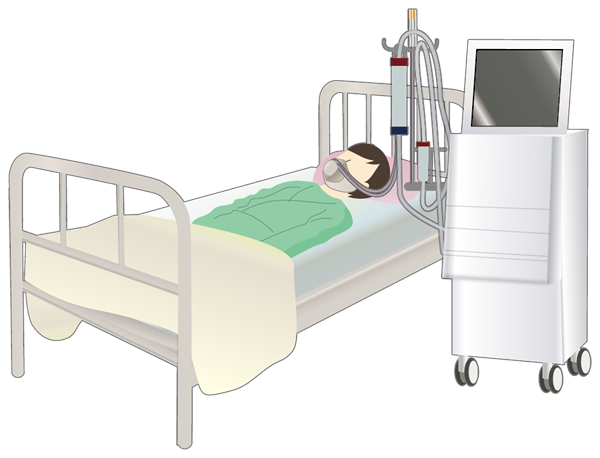
Case Study 4: Developing Compact, Low-Noise, and Step-Loss-Free Medical Equipment with Small Stepping Motors Featuring Encoders

Ventilators

Equipment

  • Medical equipment

Challenges

  • Develop a compact, low-noise system
  • Prioritize safety in equipment design

Solution

  • Proposed a low-noise 2-phase stepping motor that meets the required motor size and torque specifications
  • Customized the motor by mounting a customer-specified encoder to prevent position deviation

Expertise in Stepping Motor Customization

Please feel free to consult with us about customization requirements and related challenges.
With extensive customization know-how, we can propose functional improvements. 
Through SANYO DENKI’s customization, we help enhance the competitiveness of our customers’ equipment.

* Please note that customization may be subject to certain conditions, such as minimum order quantities. Contact us for further details.

Cooperation:   Sales Headquarters, Servo Systems Business Group,   SANYO DENKI Co., Ltd.

banner_dl_fan_selection_1000x270

Update date: /release date:

Motor Drivers
[Types and Features] SANYO DENKI Product List
SANYO DENKI 's servo motor, stepping motor, and Motion Controller product list
Motor Drivers
[Types and Features] What is a stepping motor? Applications and usage examples
What is a stepping motor? Applications and usage examples of stepping motors
Motor Drivers
[Types and Features] Stepping Motor — Operating Principles and Types
What Is a Stepping Motor? — Operating Principles, Types, Applications (Driving Methods and Control Methods), and Key Characteristics