Knowledge
[UPS Selection Points by Operating Environment]
Transport Elevators and Sheet Shutters



In logistics and building management, transport elevators and sheet shutters are essential infrastructure that supports the movement of goods, ensures safety, and improves overall operational efficiency.
However, when a power outage or electrical trouble occurs, these systems may stop functioning, causing significant disruptions to operations. To mitigate such risks, many facilities consider installing an Uninterruptible Power Supply (UPS).
Motor-driven equipment such as transport elevators and sheet shutters has unique characteristics. Selecting a UPS without fully understanding these characteristics can lead to problems after installation, including unexpected UPS shutdowns or equipment failures..
In this article, we will explain in detail the risks associated with operating without a UPS, common issues that often arise, and the key features of the recommended UPS solutions.
When a power outage occurs without a UPS in place, transport elevators and sheet shutters do more than simply stop. They can cause serious operational disruptions and even damage equipment.
Below, we take a closer look at the specific problems that may arise and the reasons behind them.
Elevators installed after September 2009 are equipped with an automatic landing system that moves the car to the nearest floor in the event of a power outage. However, without a backup power source such as a UPS, this function cannot operate.
In the case of sheet shutters, entrances and exits of warehouses or factories remain closed, completely halting the loading and unloading of goods. When logistics operations stop, shipping delays and missed delivery deadlines can occur, leading to financial losses and reduced customer trust.
Example: A power outage at a large logistics center prevents sheet shutters from opening, leaving trucks unable to load cargo and resulting in several hours of delays and losses.
When a motor suddenly stops during a power outage, significant stress is placed on brakes and gears, accelerating wear and potentially causing damage.
In addition, motors and control panels operating under unstable power conditions may experience overcurrent or overvoltage, which can damage electronic components.
As a result, equipment may fail to operate properly even after power is restored..
Transport elevators and sheet shutters store operating conditions and log data.
If this data is corrupted during a power outage, reconfiguration and readjustment are required, and recovery may take hours or even days.
Furthermore, recovery work often depends on the availability of manufacturers or maintenance providers, which can further extend downtime.
While installing a UPS can reduce the risks associated with power outages, there are challenges specific to transport elevators and sheet shutters.
Below are two common issues.
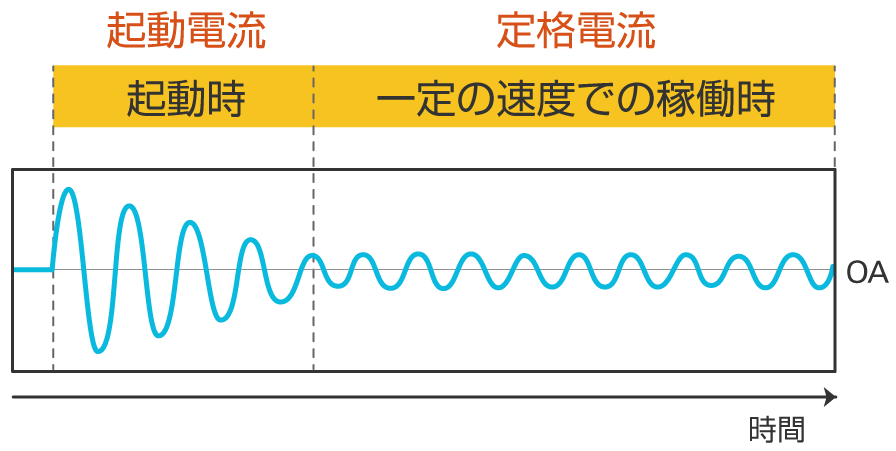
The first challenge is overload caused by inrush current.
Motors used in transport elevators and sheet shutters generate a large starting current at startup—often several times higher than the rated current. In some cases, startup current can exceed five times the normal operating current.This temporary overload may trigger the UPS’s protective functions, causing it to shut down.
UPS systems are generally designed based on rated load. To withstand inrush current, a higher-capacity UPS is required, but increasing capacity significantly raises costs.
To address this issue, it is essential to select a UPS with high overload tolerance.
Another challenge is limited installation space.
Machine rooms and control panel areas for transport elevators are typically designed to accommodate only the minimum required equipment. As a result,large and heavy UPS units are often difficult or impossible to install due to constraints such as floor space, aisle width, and maintenance access.
This is especially true in existing buildings or older facilities, where machine rooms are small and leave little room for additional equipment.
Compact and lightweight UPS systems offer flexible installation optionssuch as wall mounting or shelf placement, significantly improving installation feasibility.
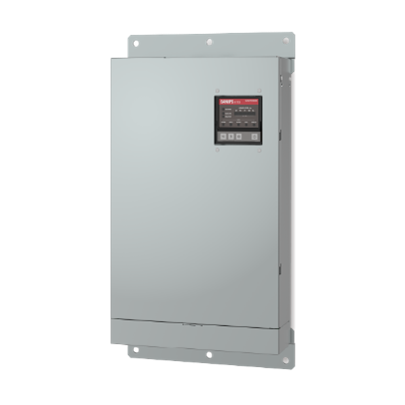
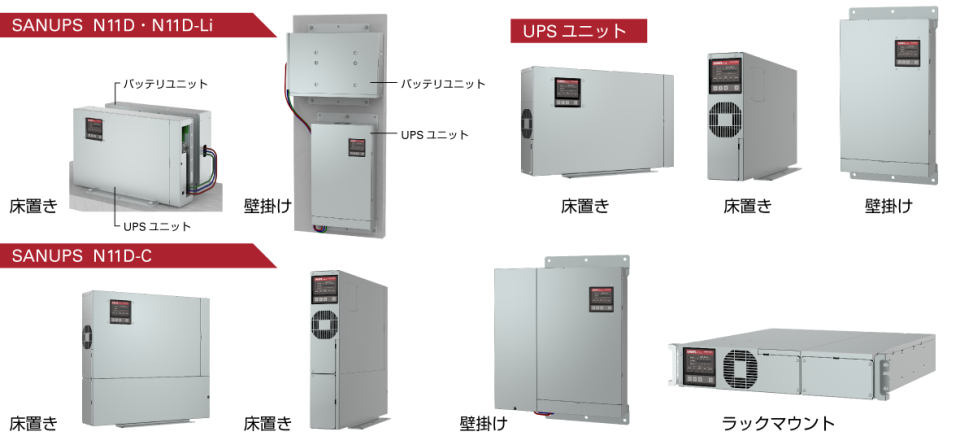
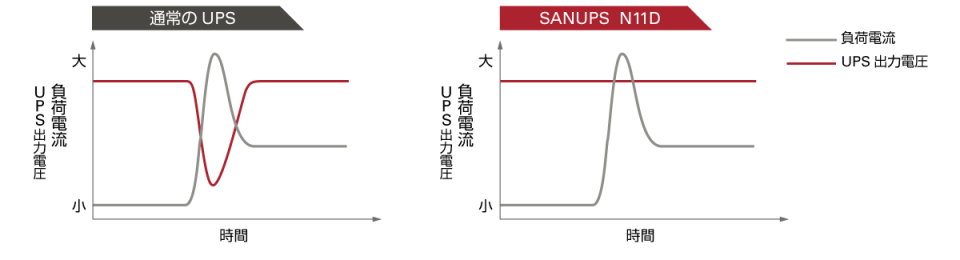
SANYO DENKI’s UPS, SANUPS N11D, offers high overload tolerance and flexible installation options, making it an ideal solution for transport elevators and sheet shutters.
Even during backup operation, SANUPS N11D delivers an overload capacity of up to 200%*1. This capability ensures stable operation of equipment that temporarily requires high power, such as transport elevators, robots, and other motor-driven devices.
With conventional UPS systems, it is often necessary to select a larger-capacity unit to accommodate temporary overloads. SANUPS N11D allows users to select a smaller-capacity UPS matched to the equipment, helping reduce overall installation costs.
*1: 1 second for lead-acid and lithium-ion battery models; 0.2 seconds for EDLC models
For the first time in the industry*2, SANYO DENKI offers a comprehensive lineup of single-phase, two-wire UPS models, including a long-life, lightweight lithium-ion battery model (N11D-Li), an EDLC model (N11D-C) suitable for momentary voltage drop compensation, and a lead-acid battery model (N11D). This lineup allows users to select the optimal model based on application requirements and maintenance policies.
The slim design supports wall mounting and easy integration into control panels or equipment. In addition, the UPS unit and battery unit can be installed separately*3, greatly expanding installation flexibility..
*2: As of January 16, 2026, based on SANYO DENKI research. Applicable to single-phase, two-wire UPS systems.
*3: Lead-acid battery and lithium-ion battery models only.
▼Lineup
We offer a lineup optimized for backing up transport elevators and sheet shutters.
January 16, 2026 SANUPS | Product News | Product Information | SANYO DENKI CO., LTD.
【Note】
This product is designed for general-purpose equipment and cannot be used for the following applications:
●Emergency power supplies for firefighting equipment as defined by the Fire Service Act and Fire Prevention Ordinances
●Backup power supplies for fire prevention or disaster prevention equipment as defined by the Building Standards Act
In addition, elevators, lifts, and other lifting equipment are subject to applicable laws and regulations, including the Building Standards Act and the Industrial Safety and Health Act, as well as technical standards specific to elevators.
When considering the use of this product for such equipment, please confirm compliance with all relevant laws and regulations and make an appropriate determination.
Supervised by: Ken Furuhata, Chief Engineer, Design Department Electronics Company, SANYO DENKI CO., LTD.
Release date:
Aiming to be the world's No. 1 in manufacturing
Technical capabilities that enable advanced customization
Our 100th anniversary soon

Global Network